CAPTAIN NEMO SYSTEM

The Captain Nemo System — Global Water Infrastructure Architecture (Master Overview)
System Architecture
This document defines the complete Captain Nemo system as a single integrated architecture. It provides the foundation for every operational, technical, and deployment component within the programme.
Rather than a collection of independent technologies, Captain Nemo is designed as one continuous logistics network, moving from water source through harvesting, transport, distribution, and long-term regional deployment.
The architecture consists of seven integrated layers:
1. Source Layer
Defines where water is identified, captured, and accessed, together with the environmental conditions governing collection.
2. Harvesting Layer
The ORCS (Offshore Rain Collecting Station) system captures and stabilises freshwater through the Quint-Cell collection architecture.
3. Transport Layer
Motherships and the wider vessel fleet transport collected water safely and efficiently from source regions into distribution networks.
4. Infrastructure Layer
Docking facilities, transfer hubs, offshore interfaces, and supporting infrastructure enable secure storage, transfer, and operational coordination.
5. Distribution Layer
Regional deployment systems manage water allocation, scheduling, and delivery to communities where demand exists.
6. Community Impact Layer
Measures the system’s contribution to water security, agriculture, public health, economic resilience, and long-term regional development.
7. Governance Layer
Provides the framework for expansion, operational standards, certification, and global replication of the Captain Nemo network.
Together these seven layers form a single operational system, with each layer supporting the next. Every technical module within Captain Nemo connects back to this architecture, creating one coordinated platform rather than a series of separate projects.
This document serves as the master reference for the Captain Nemo system, with all supporting technical and operational documents linked to this framework.
STAGE 1 SYSTEM
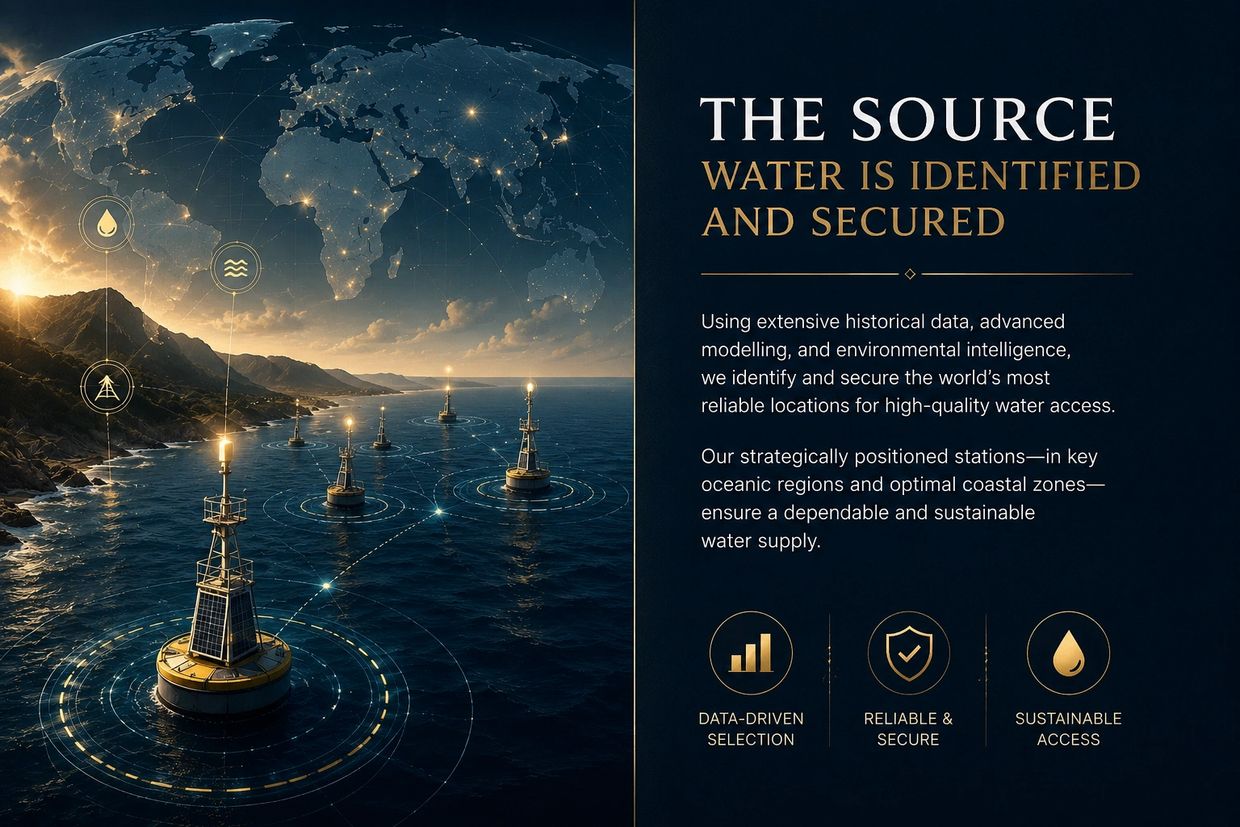
Source (Aurora)
Water regions are identified and validated through environmental intelligence systems. Aurora processes oceanic and atmospheric datasets to determine viable harvesting zones and long-term operational stability. This establishes where the system can safely and efficiently operate, forming the foundation for reliable collection and downstream distribution infrastructure.

Captain Nemo Transport Fleet (Mothership Class / Hydra Class)
The Nautilus-class Mothership is the standard operational transport vessel of The Captain Nemo Transport Fleet, responsible for routine movement of water between offshore stations, transfer points, and coastal delivery zones.

Captain Nemo Transport Fleet (Nautilus Class / Hydra Class)
The Nemo Hydra is a large-capacity Mothership-class vessel within The Captain Nemo Transport Fleet.
It operates as a high-volume aggregation and redistribution unit within offshore transfer systems, designed to consolidate harvested water from the wider network and reduce long-range transport load on regional Mothership operations.
The Hydra functions as a bulk movement and balancing vessel, supporting efficiency by reducing repeated Nautilus-class cycles across extended routes.
IMPACT on life

Impact (Community Delivery)
Delivered water enters regional distribution systems, including pipelines, agricultural corridors, transport-linked logistics, and urban supply networks, depending on local infrastructure capability. This represents the activation of economic and social benefit across the receiving region.
Global Water Demand
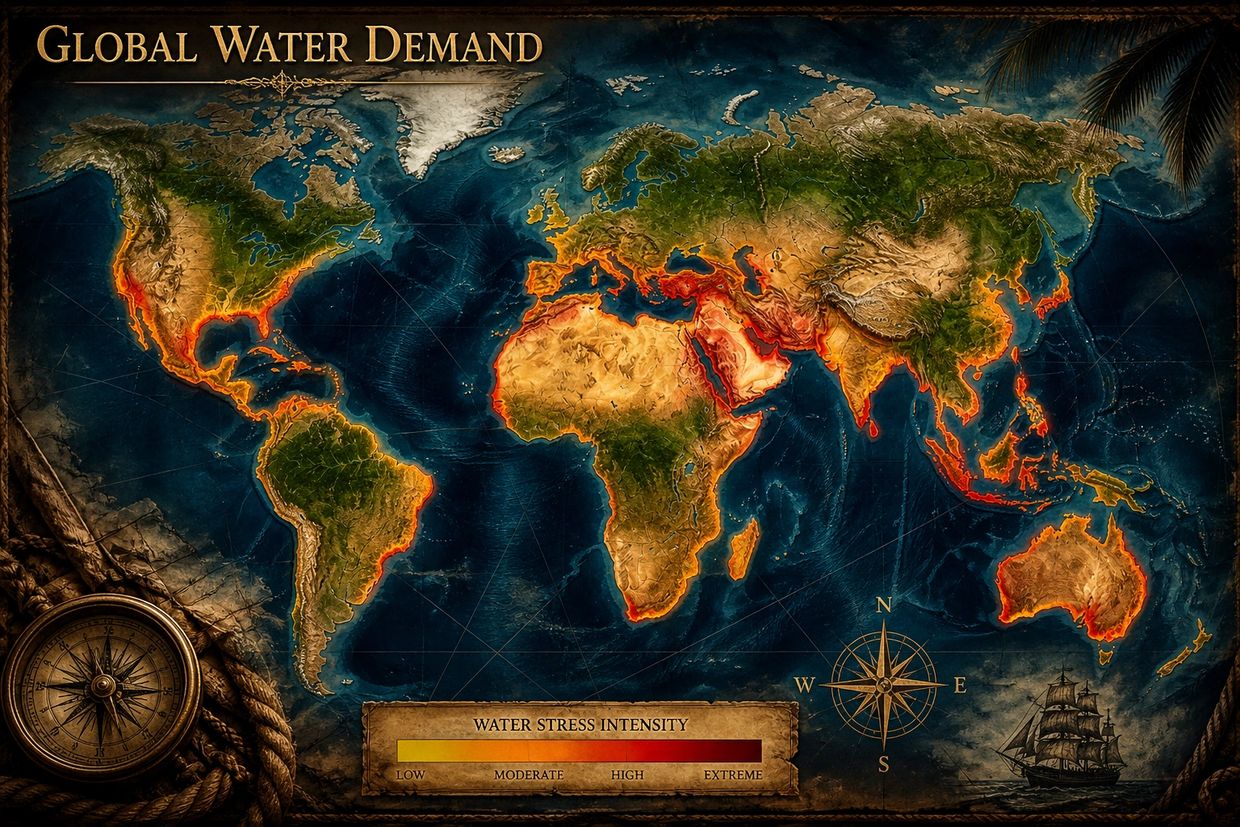
Structural demand for scalable offshore water infrastructure across water-stressed regions.
Global water demand is increasing due to persistent regional water stress, population growth, and the limits of existing inland water infrastructure. Many coastal and arid regions are unable to meet long-term freshwater requirements through conventional supply systems alone.
Water stress is concentrated in specific global zones, particularly in the Middle East, North Africa, parts of Asia, and expanding coastal urban regions worldwide. These areas experience structural imbalance between available supply and long-term demand.
This creates a sustained global requirement for scalable, flexible water delivery systems capable of operating across maritime and coastal environments.
System Deployment and Rotating Supply network
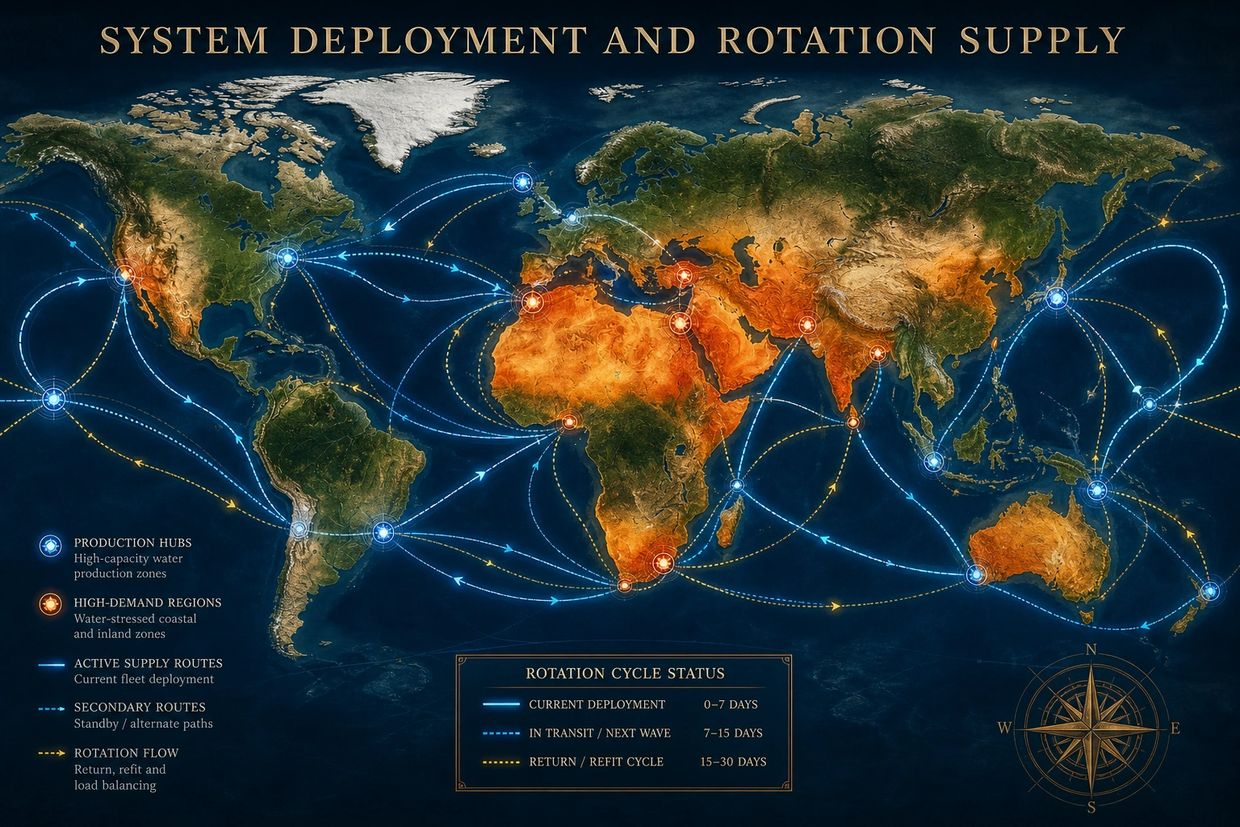
Rotating deployment network for large-scale coastal water delivery
The Captain Nemo System operates as a continuous offshore deployment network designed to deliver scalable water supply to coastal regions under persistent water stress.
Hydra stations function as offshore storage and transfer hubs, maintaining supply through continuous replenishment cycles. These hubs are positioned to serve multiple regions within operational range.
Mothership vessels operate as mobile distribution units, transporting water from Hydra stations to demand zones. A rotating fleet structure ensures continuous supply, with vessels cycling between delivery and replenishment.
This system enables persistent, large-scale water movement across multiple regions, forming a resilient offshore logistics network capable of adapting to global demand conditions.